
How to Search Cherokee County Court Records
The main Cherokee County Court case search runs through the Clerk of Courts case-search portal, which covers Superior, State, and Magistrate dockets. Patty Baker serves as Clerk of Courts. The site lets the public look up cases by case number, party name, or CSE number. Probate matters do not use that same portal. Estate and marriage filings have a separate Probate Court database. Juvenile cases are restricted by law. The Clerk warns that the online docket is a convenience tool, not the full file. Hidden pleadings with sensitive data stay blocked from the web and must be viewed in office.
Before starting a search, gather the case number, the party's full name, or the CSE number. The Clerk's screening on the case search landing page does not publish wildcard rules, so exact spelling helps. The Cherokee County Court system uses court-coded case numbers. Observed formats include 25CR0962 for criminal filings, 25M1191 for misdemeanors, and 25MW0561 for magistrate warrants.
A simple step-by-step walks most users through the search:
- Open the Clerk's case-search page at cherokeecourtclerk.com and click the docket-search link.
- Enter a case number, a party name, or a CSE number. Use only one field at a time if results are too narrow.
- Click the "+" button to the left of a case number to open the docket and view parties, court dates, and judge assignment.
- Purchase a regular copy through the online portal if a non-certified copy is enough.
- Visit the Clerk at 90 North Street, Suite G-170, Canton, Monday through Friday, for the complete or certified file.
- For probate or marriage matters, use the Probate Court estate and marriage search instead.
The Cherokee County court-system landing page lists every court agency and points to court-service shortcuts.
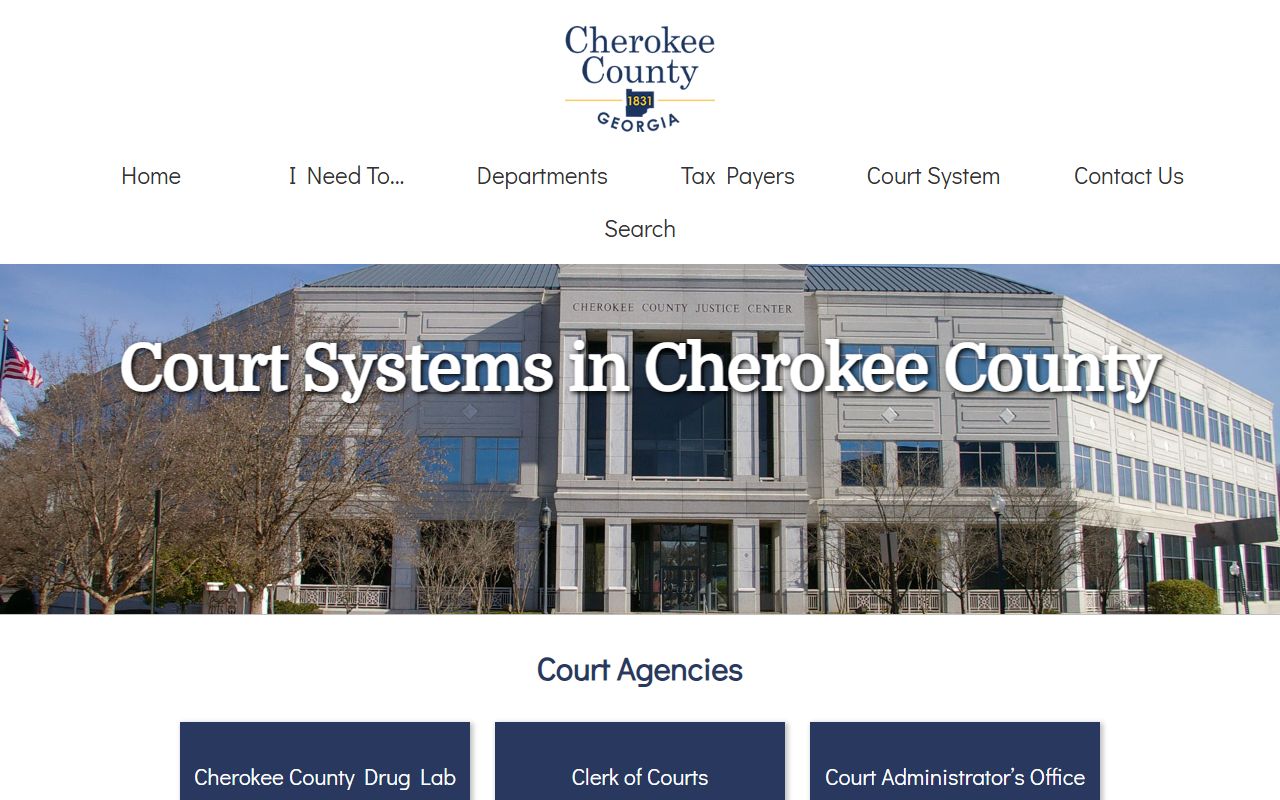
The directory groups Superior, State, Magistrate, Juvenile, and Probate Court contacts in one place, which makes it the fastest jumping-off point when a user does not yet know which division holds the file.
The Cherokee County Judicial System
Cherokee County sits in the Blue Ridge Judicial Circuit, a single-county circuit. Superior Court is the court of general jurisdiction and handles felonies, divorce, equity, land title, and the broader civil docket. State Court handles misdemeanors, traffic citations, search and arrest warrants, preliminary hearings, and civil matters not reserved to Superior Court. Magistrate Court is the intake court for warrants and first appearances; the county page says it operates 24 hours a day, 365 days a year and processes more than 30,000 judicial decisions per year. Probate Court is a separate court for wills, estates, guardianships, conservatorships, marriage licenses, and weapons carry licenses. Juvenile Court covers dependency, delinquency, CHINS, and juvenile traffic.
Court Administrator Jody Overcash runs day-to-day operations for the circuit from Suite 250 at the Justice Center. District Attorney Susan K. Treadaway prosecutes felonies; she was sworn in on June 1, 2023. Solicitor-General Todd Hayes prosecutes misdemeanors in State Court. Chief Magistrate Judge Jack M. "Trey" Goodwin III leads the Magistrate bench. Judge Amanda Speights took the Juvenile Court seat on January 1, 2025. Probate Judge Keith Wood runs the Probate Court. Appeals from the trial courts move to the Court of Appeals of Georgia or the Supreme Court of Georgia.
Case flow: Magistrate Court › State Court › Superior Court › Court of Appeals › Supreme Court of Georgia.
A quick view of the court hierarchy in Cherokee County:
| Court | Jurisdiction | Case Types |
|---|---|---|
| Superior Court | General jurisdiction | Felonies, divorce, equity, land title, major civil claims |
| State Court | County-level limited | Misdemeanors, traffic, warrants, civil not exclusive to Superior |
| Magistrate Court | Limited civil and criminal | Civil up to $15,000, dispossessory, warrants, first appearances, bail |
| Juvenile Court | Juvenile matters | Dependency, delinquency, CHINS, juvenile traffic |
| Probate Court | Probate matters | Wills, estates, guardianships, marriage licenses, weapons carry |
| Municipal Court | City-level | City ordinance, local traffic, minor city misdemeanors |
The Georgia Courts navigation explainer places these courts inside the larger state system.
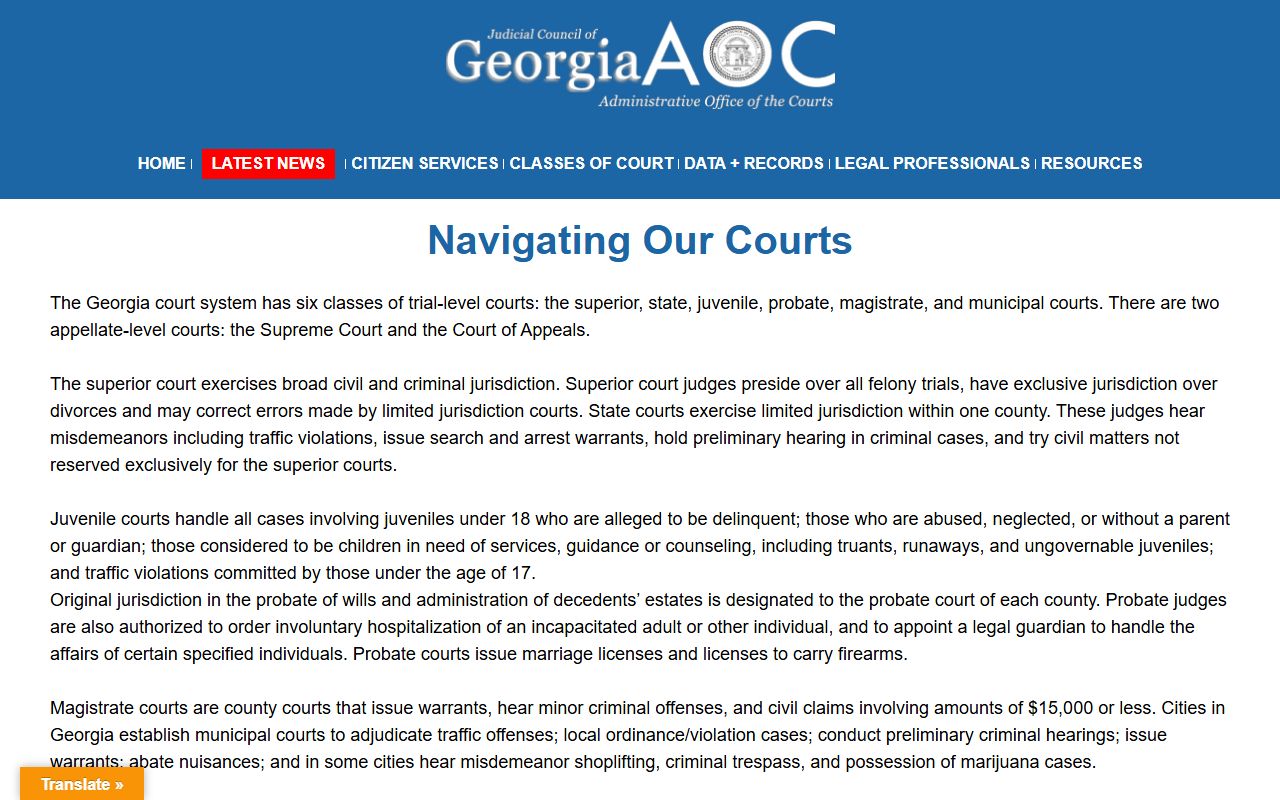
The chart shows how Cherokee's trial courts plug into Georgia's larger appellate system. The same source confirms the six trial-court classes that Cherokee County uses every day.
Cherokee County Courthouses
Most court business in Cherokee County happens at the Frank C. Mills III Justice Center in downtown Canton. The Justice Center holds Superior, State, Magistrate, Juvenile, and Probate Courts under one roof, plus the District Attorney, Solicitor-General, Court Administrator, and the main Clerk's office. Probate Court has its own suite on the third floor. The Clerk of Courts also runs a satellite office in Woodstock. The Sheriff's Office and Adult Detention Center are not at the Justice Center; the jail sits at a separate address on the south side of Canton.
The three primary court facilities are listed below. Each card lists the address, main phone, and the website that maintains the office page.
Frank C. Mills III Justice Center
90 North Street
Canton, GA 30114
678-493-6475
Probate Court (Suite 340)
90 North Street, Suite 340
Canton, GA 30114
678-493-6160
The Clerk's Annex/Satellite Office is at 155 Towne Lake Parkway, Second Floor, Woodstock, GA 30188, reachable at 770-501-8904. Veterans Treatment Court runs out of 154 North Street in Canton. The Drug Lab sits at 100 North Street, Suite G23, inside the Historic Marble Courthouse with collection hours starting at 6:00 a.m. seven days a week.
Types of Court Records Available in Cherokee County
The Cherokee County Court system produces a wide range of public records. Most fall into six broad buckets: criminal, civil, family, probate, traffic, and juvenile. Each bucket maps to a specific court and a specific clerk. Knowing which court holds the file is the first step toward finding it. Cherokee County criminal records and civil dockets all run through the Clerk of Courts portal, while Probate Court maintains its own database.
Many filings are public by default. A smaller group is sealed by court order or restricted by statute. Juvenile court files, adoption files, and family violence protective order identifiers all carry limits. The Clerk's office also blocks sensitive pleadings from the web, even when the case itself is public.
- Criminal records - Felony files in Superior Court and misdemeanor or traffic files in State Court, plus Magistrate warrants and first-appearance records.
- Civil records - Complaints, answers, motions, orders, judgments, garnishments, FIFA, and dispossessory filings.
- Family and divorce records - Divorce, custody, child support, legitimation, protective orders, and name changes.
- Probate records - Wills, estates, guardianships, conservatorships, and marriage licenses.
- Traffic court records - State Court citations, payable tickets, and must-see-judge accident citations.
- Juvenile records - Restricted by Georgia law; only parties, attorneys, and authorized agencies have access.
Public access also covers court dockets, the day-by-day list of court events, plus the broader public records the county maintains under the Open Records Act.
What Cherokee County Court Records Show
A typical Cherokee County court file holds a fairly standard set of fields. The Clerk's case search shows the case posture: parties, court dates, judge assignment, docket events, and disposition. Some fields appear in every court file; others change depending on the court. Sensitive items, such as Social Security numbers and protected identifiers, are redacted or sealed under Uniform Superior Court Rule 21.6 and O.C.G.A. § 9-11-7.1.
The table below covers the fields a researcher should expect to see when pulling a Cherokee County Court record online.
| Field | What It Shows |
|---|---|
| Case Number | Court-coded value such as 25CR0962 (criminal), 25M1191 (misdemeanor), or 25MW0561 (magistrate warrant). |
| Filing Date | Date the complaint, petition, accusation, or charge was filed with the clerk. |
| Parties | Plaintiff and defendant, petitioner and respondent, or State of Georgia and defendant. |
| Charges / Cause | Offense, charging document, and any case or warrant number tied to the booking. |
| Disposition | Current or final outcome: pending, dismissed, dead docket, plea, conviction, or acquittal. |
| Sentence / Judgment | Sentence imposed, fine, probation, or final civil judgment with any FIFA writ recorded. |
For the most current and authentic file, the Clerk says users should contact the office at the Justice Center. The online portal is a convenience tool, not a substitute for the official file.
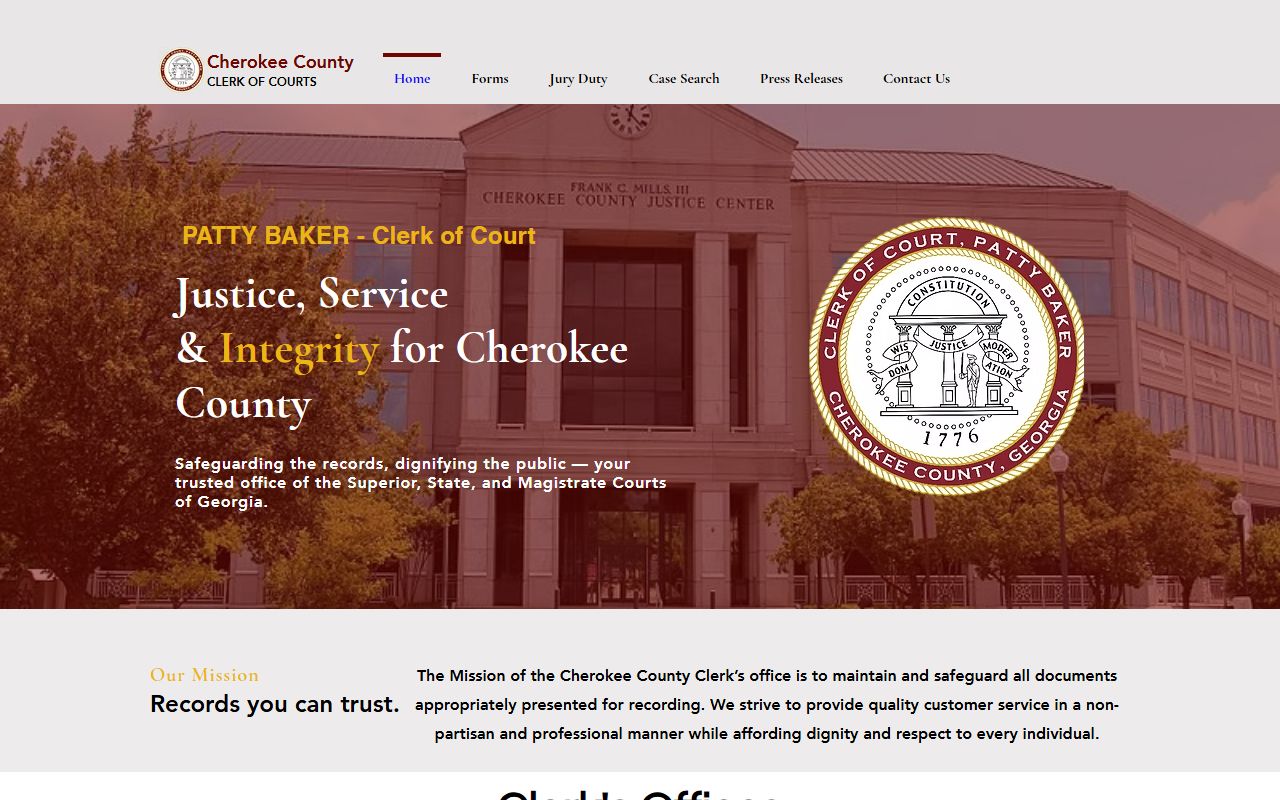
The Clerk's homepage lays out the office mission, the Superior, State, and Magistrate divisions, and the case search entry point. Lead-in copy on the page tells users what the portal does and does not replace.
Public Access Laws for Cherokee County Court Records
Georgia treats most court files as public records. The framework rests on the Open Records Act, the Uniform Superior Court Rules, and a small set of confidentiality statutes. The Georgia Attorney General Open Government page explains the basics. Agencies generally must produce responsive records within three business days or send a written explanation. The Attorney General's Open Government FAQ caps copy charges at 25 cents per page and bars fees for the first 15 minutes of staff time. Uniform Superior Court Rule 21 starts from a strong presumption of public access to court files.
Three statutes carry most of the weight when a Cherokee County court file is the subject of a request:
Key Statutes:
O.C.G.A. § 50-18-70 - Sets the public policy in favor of open records and defines what counts as a public record under the Open Records Act.
O.C.G.A. § 50-18-71 - Limits fees to direct administrative costs, bans charges for the first 15 minutes, and caps copy fees at 25 cents per page.
O.C.G.A. § 50-18-72 - Lists exemptions including SSNs, medical and financial details, mother's birth name, and protected home information for certain public employees.
Uniform Superior Court Rule 21 - Treats court records as public unless access is limited by law or by a formal Rule 21 procedure.
Record restriction under O.C.G.A. § 35-3-37 is the modern Georgia version of expungement. For arrests after July 1, 2013, the applicant works through the prosecutor, not GBI. For arrests before that date, the applicant files at the arresting agency.
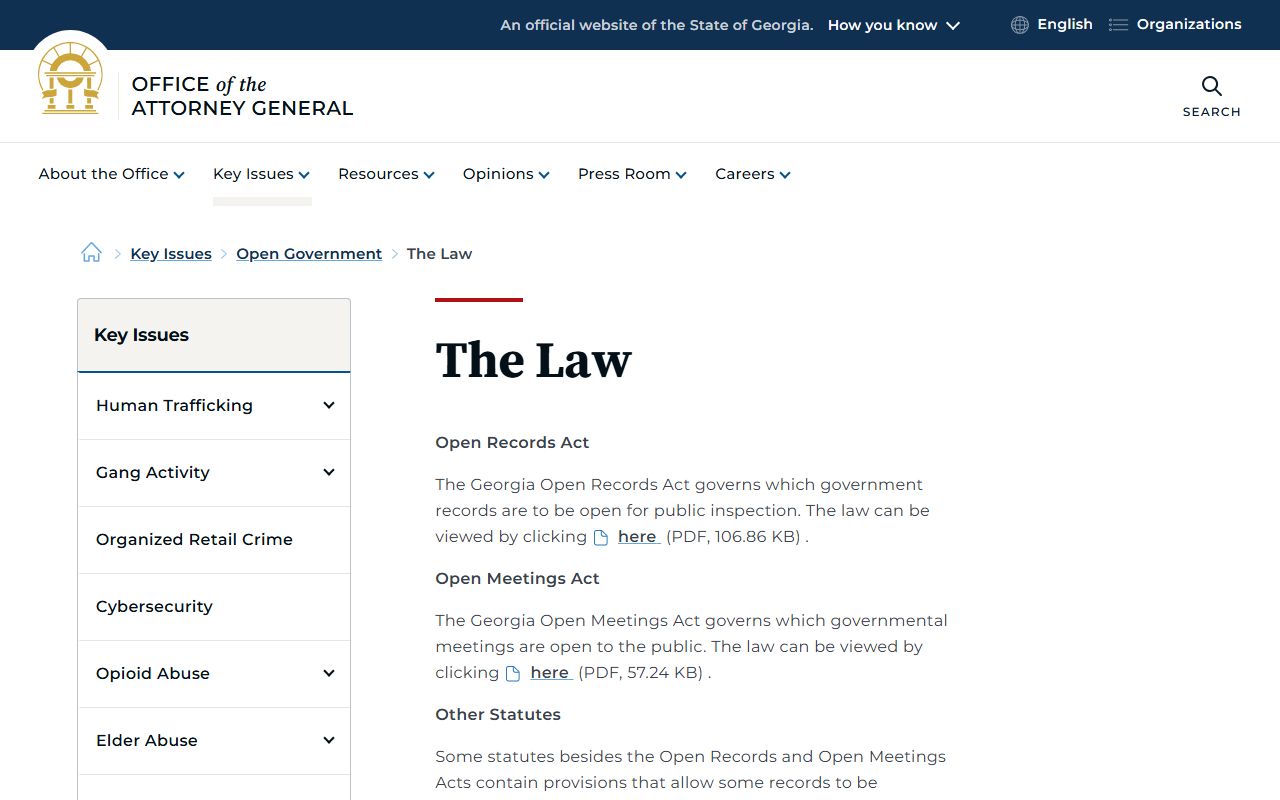
The Attorney General Open Government page is the plain-English starting point for any public records dispute in Cherokee County, including denied court file requests.
Records That Are Restricted or Confidential
Not every Cherokee County court record is open. Several categories carry firm legal limits. Juvenile case files under O.C.G.A. § 15-11 are not part of normal adult public dockets. Adoption files filed with the Clerk of Superior Court carry a county-stated rule that clerks and staff are prohibited from providing copies or information. Family violence and stalking protective order identifiers are placed on a separate sealed page under Uniform Superior Court Rule 21.6. Medical and mental health information is exempt under the Open Records Act. Treatment Accountability Court records can also involve HIPAA limits.
Sealing a court record requires a Rule 21 motion, a court hearing, and a written finding that harm outweighs the public interest. Ex parte temporary seals cannot exceed 30 days. The Clerk's case search page notes that hidden pleadings with sensitive data are blocked from the web; viewing them requires an in-person visit. To challenge a denial, the requester should ask the agency for the statutory citation supporting the withholding and may file a superior court action under the Open Records Act.
Note: Cherokee County warrant records do not appear in a public search portal; the Sheriff Warrant/Civil Unit maintains them internally and warns the public it will never collect warrant payments by phone.
Specialty Courts in Cherokee County
Cherokee County runs several accountability courts that give some defendants an alternative to prison or probation revocation. These programs are not separate buildings; they pull judges, prosecutors, defense lawyers, treatment providers, and probation staff into a single team. Most cases route through Superior Court or State Court before the team accepts a referral. Sentencing and graduation follow program rules rather than standard probation rules.
The Treatment Accountability Court (TAC) serves defendants whose charges trace back to untreated or undertreated mental illness. The Cherokee County TAC page says the program runs a minimum of 18 months and uses a four-phase model with medication management, therapy, drug and alcohol monitoring, intensive case management, and graduated sanctions. Ethan Childers serves as coordinator. Eligibility requires a diagnosed mental illness, Cherokee County residency, and no prior or pending violent felony charges.
Other programs round out the local docket:
- Veterans Treatment Court - Coordinated by Jenny Mehdikarimi at 154 North Street, Canton, 678-493-6585, with Judge Dee Morris presiding.
- Drug Accountability Court (Felony) - Targets felony drug offenders; monitoring runs through the county Drug Lab.
- DUI / Misdemeanor Drug Court - Linked from the Superior Court Clerk page for participants under State Court jurisdiction.
- Juvenile Drug Treatment Court - Coordinated by Shannon Kirby at 678-493-6257.
The Drug Lab opens for collections at 6:00 a.m. seven days a week. The standard drug screen costs $35; forensic confirmation within seven days runs $65.
Cherokee County Sheriff and Jail
Sheriff Frank Reynolds leads the Cherokee County Sheriff's Office. The agency operates the Adult Detention Center, five Uniform Patrol Precincts, the Administration Building, the Criminal Investigations Division at the South Annex, and security at the Justice Center. The Sheriff page says the agency serves more than 299,000 residents. The Adult Detention Center is the only full-service jail in Cherokee County; city police departments may hold detainees for short periods only.
The Adult Detention Center opened in 1989. Its first expansion finished in 2002 and its second wrapped in 2021. The 2021 work added 14 housing units, 21 dayrooms, internal control towers, and three exercise yards on top of the original six direct-observation housing units and 27-bed medical infirmary. The jail is a National Sheriff's Association Triple Crown agency accredited by ACA, CALEA, and NCCHC. The most recent NCCHC re-accreditation came in April 2023.
For day-to-day custody questions, the public uses the Sheriff's Jail List inmate search. The roster shows current bookings with inmate name, booking ID, date of birth, booking date, arresting agency code, charges, bond amount, and bond type. The full breakdown lives on the Cherokee County inmate records page. Recent custody changes are tracked separately through released inmates tools and population trends through the inmate population page.
Marriage, Divorce, and Probate Court
Cherokee County splits marriage, divorce, and probate work between two offices. Probate Court issues marriage licenses, keeps marriage records, and handles wills, estates, guardianships, and conservatorships. Superior Court has exclusive jurisdiction over divorce in Georgia. Divorce filings live with the Clerk of Courts under the Superior Court docket, not with Probate Court. The Superior Court Clerk supplies divorce packets with and without minor children, a domestic financial affidavit, a parenting plan template, and a child support addendum.
Probate Court accepts marriage license applications Monday through Friday from 8:30 a.m. to 4:10 p.m. on a walk-in basis. The applicant must submit the completed form to a clerk by 4:10 p.m. for same-day processing. The court does not perform ceremonies. Certified marriage copies for Cherokee-issued licenses cost $10 each. For more detail, see the marriage and divorce records and probate records pages.
A few probate terms come up often in records searches. The short list below covers the most common.
- Testator
- The person who makes a will and whose estate will be probated upon death.
- Executor
- The person named in a will to manage and distribute the estate; called an administrator if the court appoints one without a will.
- Conservator
- A person appointed by Probate Court to manage the property and financial affairs of an adult or minor who cannot manage their own.
Cherokee County Court Records Fees
Court fees in Cherokee County are set by Georgia law and the local Clerk's published schedule. The Clerk's Obtaining Copies page states the office cannot waive copy charges set by statute. Regular copies can be purchased and printed from the online portal. For mail orders, the Clerk requires certified check, money order, or cashier's check. Cash and credit cards are accepted in person. The Sheriff's Warrant/Civil Unit publishes its own fee list for service of process and evictions. Probate Court charges $10 per certified marriage copy.
The table below pulls the most common Cherokee County Court fees into one view. Filing fees for Superior, State, and Magistrate Court are set in the statewide cost schedule linked from the Clerk's Clerk of Courts fee schedule page.
| Item | Amount |
|---|---|
| State Court subpoena | $5.00 each |
| Probate marriage certificate copy | $10.00 each |
| Sheriff service of process (per copy) | $50.00 |
| Sheriff service of garnishment summons | $50.00 |
| Witness subpoena (Sheriff service) | $10.00 |
| Eviction fee (Sheriff) | $25.00 nonrefundable |
| Plain copies from Clerk portal | Set by Georgia law |
Probate Court also accepts debit and credit cards with a 4% service fee, but credit cards are not accepted after 4:30 p.m. The county takes denominations of $20 or less only. Money orders should be made payable to Cherokee County Probate Court or Cherokee County Clerk of Courts as the filing dictates.
How to Interpret Cherokee County Court Records
Reading a Cherokee County court file gets easier once a few terms are clear. Court records use a shorthand that mixes Georgia procedural terms with general legal vocabulary. Charges are not convictions. A docket can show many motions and orders without any final outcome. A "dead docket" entry does not mean dismissed; the case is inactive and can be called back. A "dismissed with prejudice" entry means the case is closed and cannot be refiled. A "nolle prosequi" entry shows that the prosecutor chose not to move forward.
Bond and warrant entries also carry codes. The Sheriff's jail list uses bond type codes such as NO and BREF; the display logic on the public roster turns these into phrases such as "No Bond" or "Bond off Bond." Bench warrants are issued by judges, usually after a missed court date. Magistrate warrants carry an MW prefix in the case number, while State Court criminal cases use a CR prefix and misdemeanors use an M prefix.
A quick gloss of the most common terms:
- Plaintiff - The party filing the civil suit; the State in a criminal case.
- Indictment - The grand jury charging document for a felony in Superior Court.
- Accusation - A prosecutor-filed charging document, often used in State Court misdemeanors.
- Disposition - The current outcome of a charge or case.
- FIFA - Writ of fieri facias; used to collect a civil money judgment.
- Record restriction - Georgia's version of expungement, limiting public access to a criminal history entry.
For deeper definitions, the Cherokee County Court Records subpage runs a longer glossary tied to specific Clerk fields.
Accuracy and Record Limitations
Online dockets update on a schedule that the Clerk does not publish. Sensitive pleadings stay off the web by design. Jail roster data may lag actual custody status by several hours, especially during a busy intake shift. Cherokee County court information should always be confirmed with the originating office before it is used for any legal, employment, or housing decision. Federal law also bars the use of this information for FCRA-regulated purposes.
The Georgia Courts e-access page reminds users that searches go through provider sites and may require an account. Cherokee County's Clerk portal is the local entry point for Cherokee dockets.
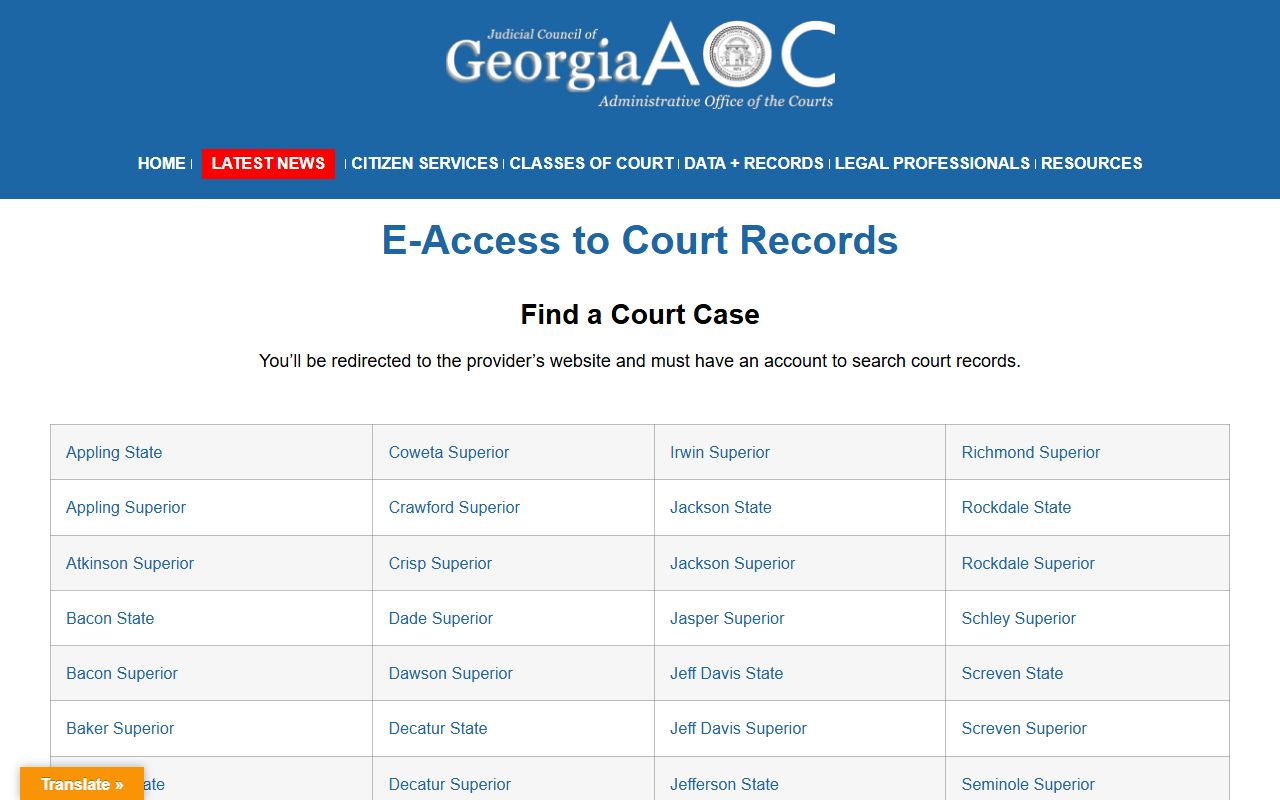
The state e-access listing groups Georgia counties by provider, which helps a researcher confirm where Cherokee fits in the statewide picture and where neighboring counties send their public files.
Note: Always confirm Cherokee County court details with the Clerk of Courts before relying on online records for any legal, financial, employment, or housing purpose.
History of Cherokee County Courts
The Cherokee County court campus mixes modern and historic buildings. The Frank C. Mills III Justice Center anchors operations at 90 North Street in downtown Canton. The Historic Marble Courthouse at 100 North Street still supports court work; the county Drug Lab occupies Suite G23 on the ground level. The Adult Detention Center opened in 1989, expanded in 2002, and expanded again in 2021. Court technology has caught up as well. The Clerk runs an online docket and copy portal. The Magistrate Court accepts e-filings for statements of claim, dispossessories, and garnishments and offers a kiosk on the first floor for users without computer access. Superior Court continues to publish Zoom hearing details for hearings livestreamed through the Court Administrator.
Leadership has also shifted recently. The Treatment Accountability Court was established in December 2015 and counted 54 graduates by May 2024. District Attorney Susan K. Treadaway was sworn in on June 1, 2023, after acting service. Superior Court Judges named Amanda Speights as the new Juvenile Court Judge effective January 1, 2025. These changes shape who signs orders and who handles which case type in 2026.
Federal Cases Connected to Cherokee County
Federal criminal prosecutions, civil rights actions, and federal-question civil cases tied to Cherokee County do not appear in the local Clerk's docket. Those files belong to the U.S. District Court for the Northern District of Georgia. Federal bankruptcy cases route through the U.S. Bankruptcy Court for the Northern District of Georgia. Appeals run to the U.S. Court of Appeals for the Eleventh Circuit. Federal inmate searches go through the Bureau of Prisons locator. Most public access to federal dockets runs through PACER, which requires an account and may charge per-page fees.
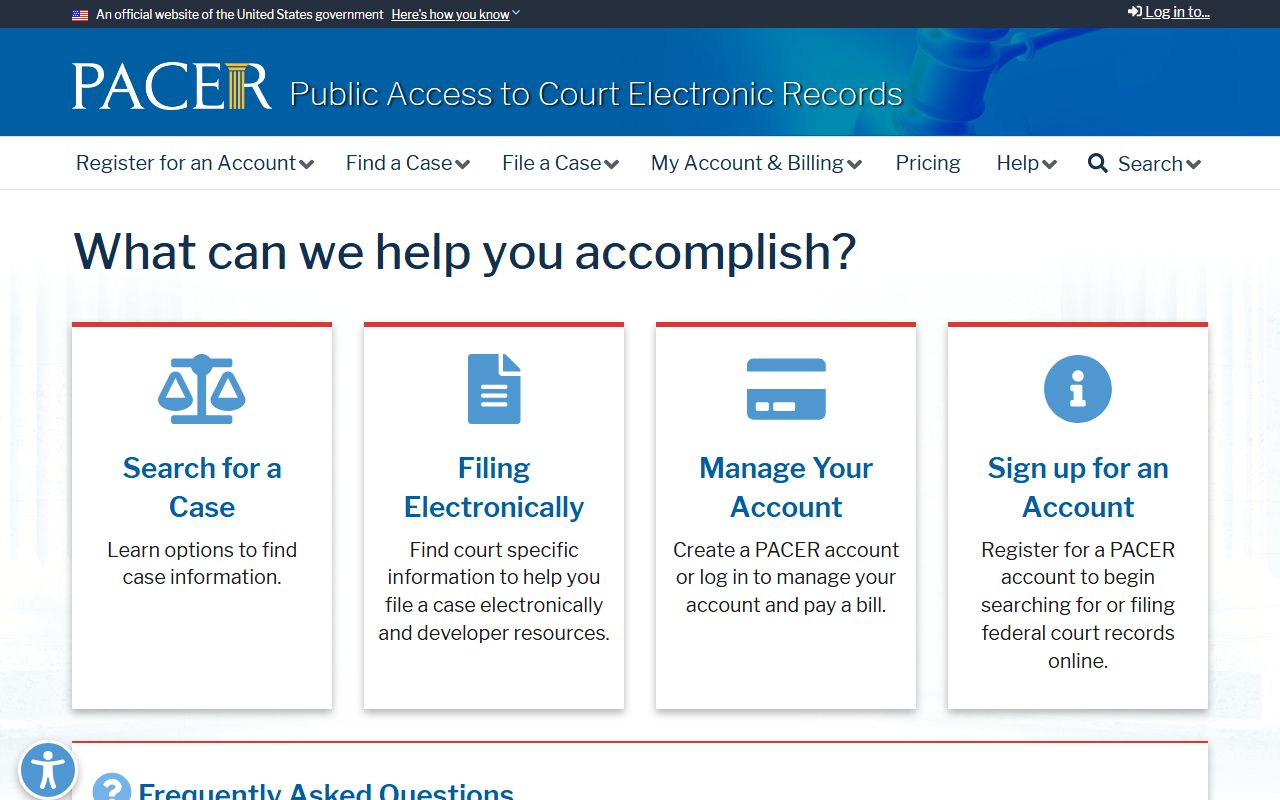
The PACER homepage explains account setup and fee policy. For free alternatives where opinions are available, researchers turn to CourtListener, which mirrors many federal opinions and some dockets.
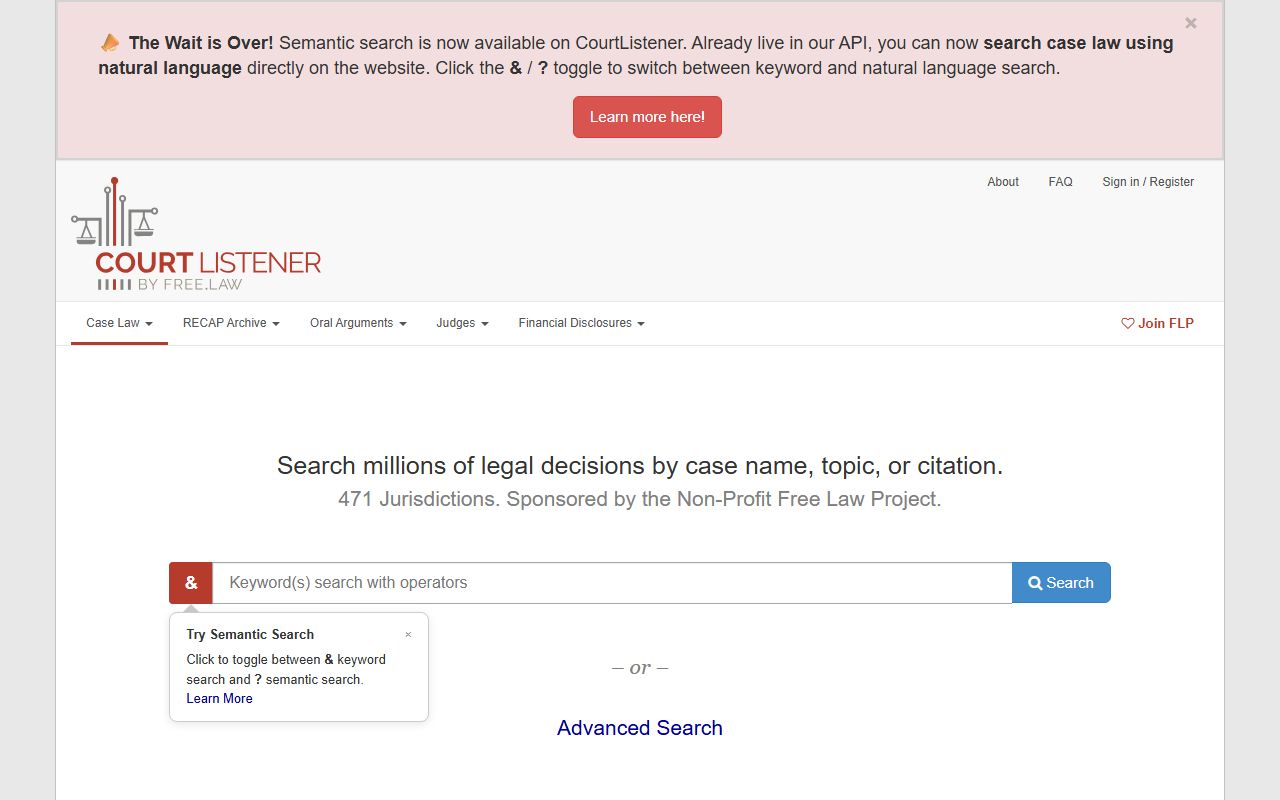
CourtListener carries a deep archive of federal opinions and a free federal docket sample. It does not replace PACER, but it can save a Cherokee County researcher a fee when only an opinion is needed.
Frequently Asked Questions
How do I search Cherokee County court records?
Use the Clerk of Courts case search at cherokeecourtclerk.com for Superior, State, and Magistrate dockets. Search by case number, party name, or CSE number. Click the "+" button to the left of a case number to open the docket. For probate filings and marriage records, use the Probate Court's separate Estate and Marriage Database on the county site. Juvenile records and adoption records are restricted and will not appear in public results. For the most current or certified copy, contact the Clerk's office.
Where is the Clerk of Courts located?
The main Clerk of Courts office is at 90 North Street, Suite G-170, Canton, GA 30114. Office hours run Monday through Friday from 8:00 a.m. to 5:00 p.m. Superior Court Clerk service runs 8:30 a.m. to 5:00 p.m. The Annex/Satellite Office sits at 155 Towne Lake Parkway, Second Floor, Woodstock, GA 30188 and is reachable at 770-501-8904. Clerk of Courts Patty Baker leads the office. For case-search problems, the Clerk lists 678-714-8778.
Who is the District Attorney for Cherokee County?
Susan K. Treadaway is the District Attorney for the Blue Ridge Judicial Circuit, which covers Cherokee County only. Governor Brian Kemp swore her in on June 1, 2023, after she served as acting DA. Her office is on the third floor of the Justice Center at 90 North Street, Suite 390, Canton. The Solicitor-General handles State Court misdemeanors; Todd Hayes holds that office at 678-493-6360.
More on the Cherokee County Court Records FAQ page, which carries 20-plus additional questions about jail visits, marriage licenses, warrants, traffic citations, and record restriction.